





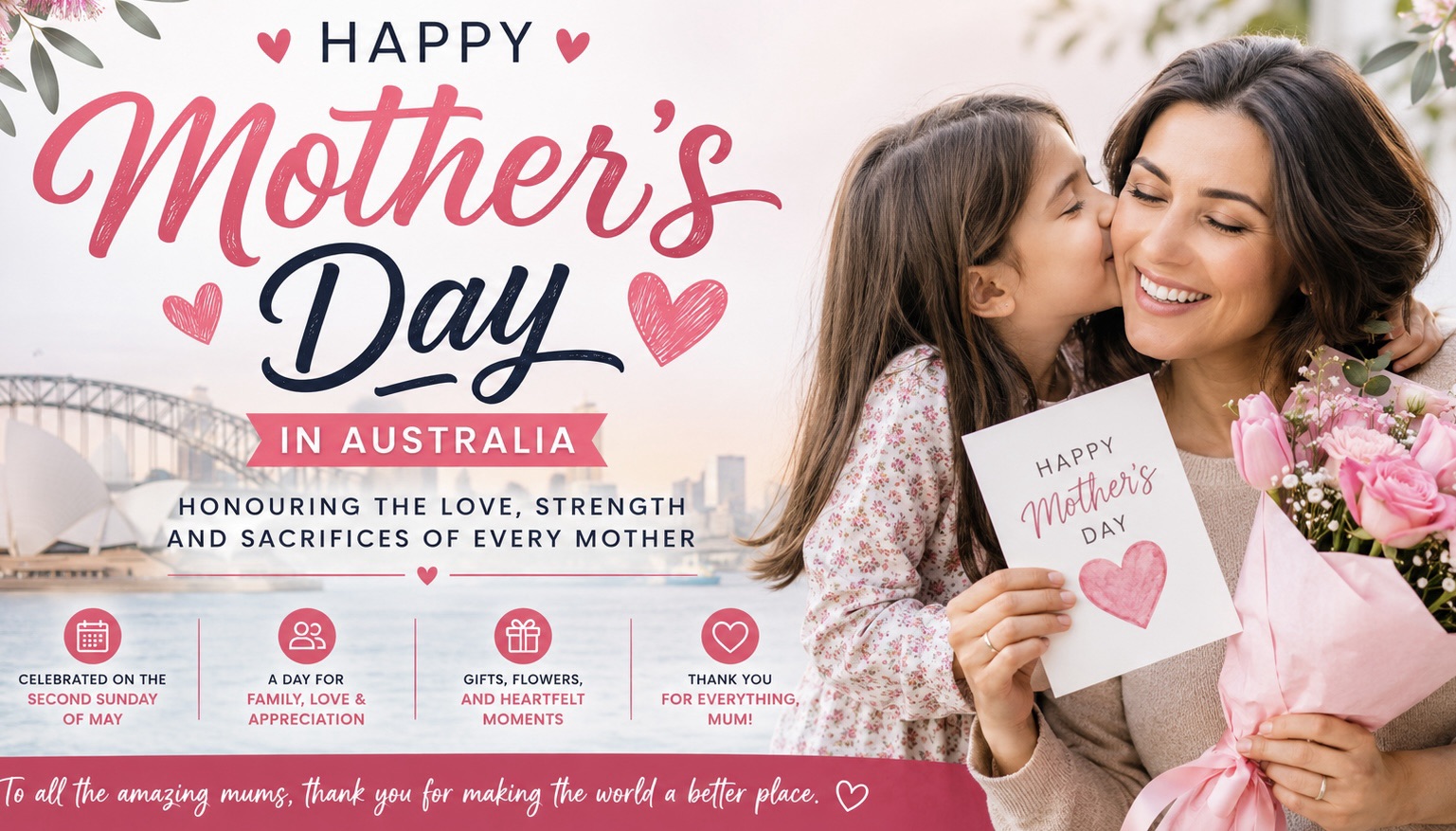
Mother’s Day in Australia: A Celebration of Love, Sacrifice, and Gratitude
Mother’s Day is one of the most meaningful and emotional celebrations observed in Australia. It is a special occasion dedicated to honouring mothers and mother figures for their unconditional love, endless sacrifices, guidance, and support. Across the country, families gather to show appreciation for the women who play one of the most important roles in shaping lives, families, and society.
Celebrated annually on the second Sunday of May, Mother’s Day in Australia is filled with joy, love, emotional moments, family traditions, and heartfelt appreciation. From young children making handmade cards to adults travelling long distances to spend time with their mothers, the day carries deep emotional value for Australians of all backgrounds.
The True Meaning of Mother’s Day
Mother’s Day is not simply about gifts, flowers, or celebrations. At its heart, it is about recognising the immeasurable contribution mothers make every single day. Mothers are often the foundation of families — providing emotional strength, wisdom, encouragement, and care through every stage of life.
A mother’s role goes beyond raising children. Mothers teach values, provide comfort during difficult times, celebrate achievements, and inspire confidence. Their influence shapes future generations and contributes greatly to society.
The day also honours:
Grandmothers Stepmothers Foster mothers Single mothers Adoptive mothers Mothers-to-be Mother figures and caregivers
For many people, Mother’s Day is also a time to remember and pay tribute to mothers who are no longer with us.
The History of Mother’s Day in Australia
The origins of Mother’s Day can be traced back to the United States in the early 1900s. Anna Jarvis, an American social activist, campaigned to create a national day to honour mothers following the death of her own mother. Her efforts eventually led to Mother’s Day becoming an official celebration in the United States in 1914.
Australia soon adopted the tradition, and it gradually became an important annual event celebrated nationwide. Over the decades, Mother’s Day evolved into one of the busiest occasions for florists, restaurants, gift shops, and cafés across Australia.
Despite its commercial growth, the emotional and family-oriented meaning of the day remains central to Australian culture.
Australian Mother’s Day Traditions
Australians celebrate Mother’s Day in many beautiful and meaningful ways. Although traditions vary between families and cultures, several customs are widely observed across the country.
1. Giving Flowers
Flowers are one of the most popular Mother’s Day gifts in Australia. Chrysanthemums are especially significant because the word “mum” appears at the end of the flower’s name, making them a symbolic choice.
Australians also follow a touching flower tradition:
Wearing a coloured flower honours a living mother. Wearing a white flower remembers a mother who has passed away.
Roses, lilies, tulips, orchids, and native Australian flowers are also commonly gifted.
2. Breakfast in Bed
One of the most loved Mother’s Day traditions is serving mothers breakfast in bed. Children often prepare simple meals such as toast, pancakes, coffee, tea, or fruit with the help of their fathers or older siblings.
This gesture symbolises appreciation and gives mothers a chance to relax and feel special.
3. Family Meals and Gatherings
Restaurants and cafés throughout Australia become extremely busy on Mother’s Day as families gather for breakfast, brunch, lunch, or dinner celebrations.
Some families prefer:
Beach picnics Home-cooked meals BBQ gatherings Garden parties Outdoor celebrations in parks
The main purpose is spending quality time together and expressing gratitude.
4. Handmade Gifts and Cards
Children in schools and childcare centres often prepare handmade cards, paintings, crafts, and poems for their mothers. These gifts are treasured because they carry emotional value and personal effort.
Many schools also organise:
Mother’s Day stalls Concerts Tea parties Classroom celebrations Art exhibitions
These events help children learn the importance of gratitude and appreciation.
Motherhood in Modern Australia
Motherhood in Australia has evolved significantly over the years. Modern mothers balance many responsibilities, including:
Careers and professional work Parenting Household management Community involvement Education and childcare responsibilities
Many Australian mothers successfully manage both work and family life while continuing to provide emotional support and care to their families.
Single mothers, working mothers, stay-at-home mothers, and migrant mothers all contribute enormously to Australian society in different ways. Their resilience, dedication, and hard work deserve recognition and respect.
The Role of Mothers in Emotional Development
Mothers often play a critical role in a child’s emotional and psychological development. Research consistently shows that loving parental support contributes positively to:
Emotional security Self-confidence Social skills Academic achievement Mental wellbeing
The bond between a mother and child is often one of the strongest human relationships. Mothers frequently become a child’s first teacher, protector, and source of comfort.
Even in adulthood, many people continue to rely on their mothers for guidance, encouragement, and emotional support.
Mother’s Day in Multicultural Australia
Australia is one of the most multicultural countries in the world. Families from different ethnic, religious, and cultural backgrounds celebrate Mother’s Day in unique and meaningful ways.
For Sri Lankan families living in Australia, Mother’s Day often includes:
Family gatherings Traditional Sri Lankan meals Religious blessings Respectful cultural traditions Overseas calls to parents and relatives in Sri Lanka
Indian, Chinese, Middle Eastern, African, and European communities also bring their own customs and traditions to the celebration, making Mother’s Day in Australia rich in cultural diversity.
For migrant families separated by distance, technology has become an important way to connect. Video calls, voice messages, online gifts, and social media tributes help families stay emotionally close even when living far apart.
The Emotional Side of Mother’s Day
While Mother’s Day is joyful for many, it can also be emotional or difficult for some people. Individuals who have lost their mothers, experienced family separation, or struggled with infertility may find the day challenging.
As a result, many Australians also use Mother’s Day as a time for reflection, remembrance, compassion, and emotional support.
Acts of kindness, empathy, and gratitude become especially important during this time.
The Economic Impact of Mother’s Day
Mother’s Day is also a major economic event in Australia. Millions of dollars are spent annually on:
Flowers Jewellery Chocolates Beauty products Dining experiences Travel Greeting cards Personalised gifts
Florists, restaurants, retailers, and hospitality businesses often experience some of their busiest trading periods during Mother’s Day weekend.
However, many Australians believe the most meaningful gifts are not expensive items, but rather time, love, appreciation, and genuine care.
Simple Ways to Celebrate Mother’s Day
Celebrating Mother’s Day does not need to be expensive. Small and thoughtful gestures can make the day incredibly meaningful.
Some simple ways to celebrate include:
Spending quality time together Writing a heartfelt letter Cooking a homemade meal Creating a photo album Giving flowers Helping with household tasks Sharing memories Saying “thank you”
Sometimes the simplest expressions of love leave the strongest impact.
A Tribute to Mothers Everywhere
Mothers are often the silent strength behind every successful family. They sacrifice sleep, time, comfort, and personal goals to care for those they love. Their patience, compassion, and dedication shape not only families but entire communities.
Whether they are raising children, supporting partners, caring for elderly parents, or balancing multiple responsibilities, mothers continue to inspire society with their resilience and love.
Mother’s Day serves as a reminder that mothers should be appreciated not just once a year, but every day.
Conclusion
Mother’s Day in Australia is far more than a celebration — it is a tribute to love, sacrifice, compassion, and family. It is a day filled with appreciation, emotional connection, and gratitude for the women who dedicate their lives to nurturing others.
In a busy and fast-changing world, Mother’s Day encourages people to pause, reflect, and recognise the importance of family relationships and maternal love.
No matter the culture, language, or background, the message of Mother’s Day remains universal:
A mother’s love is one of the greatest gifts in life.
To all mothers, grandmothers, caregivers, and maternal figures across Australia and around the world:
Happy Mother’s Day! 💐
Thank you for your endless love, strength, sacrifice, and care. Your impact on the world is truly priceless.


