




How to Stay Relaxed and Manage a Busy Life: The Ultimate Guide to Reducing Stress and Finding Balance
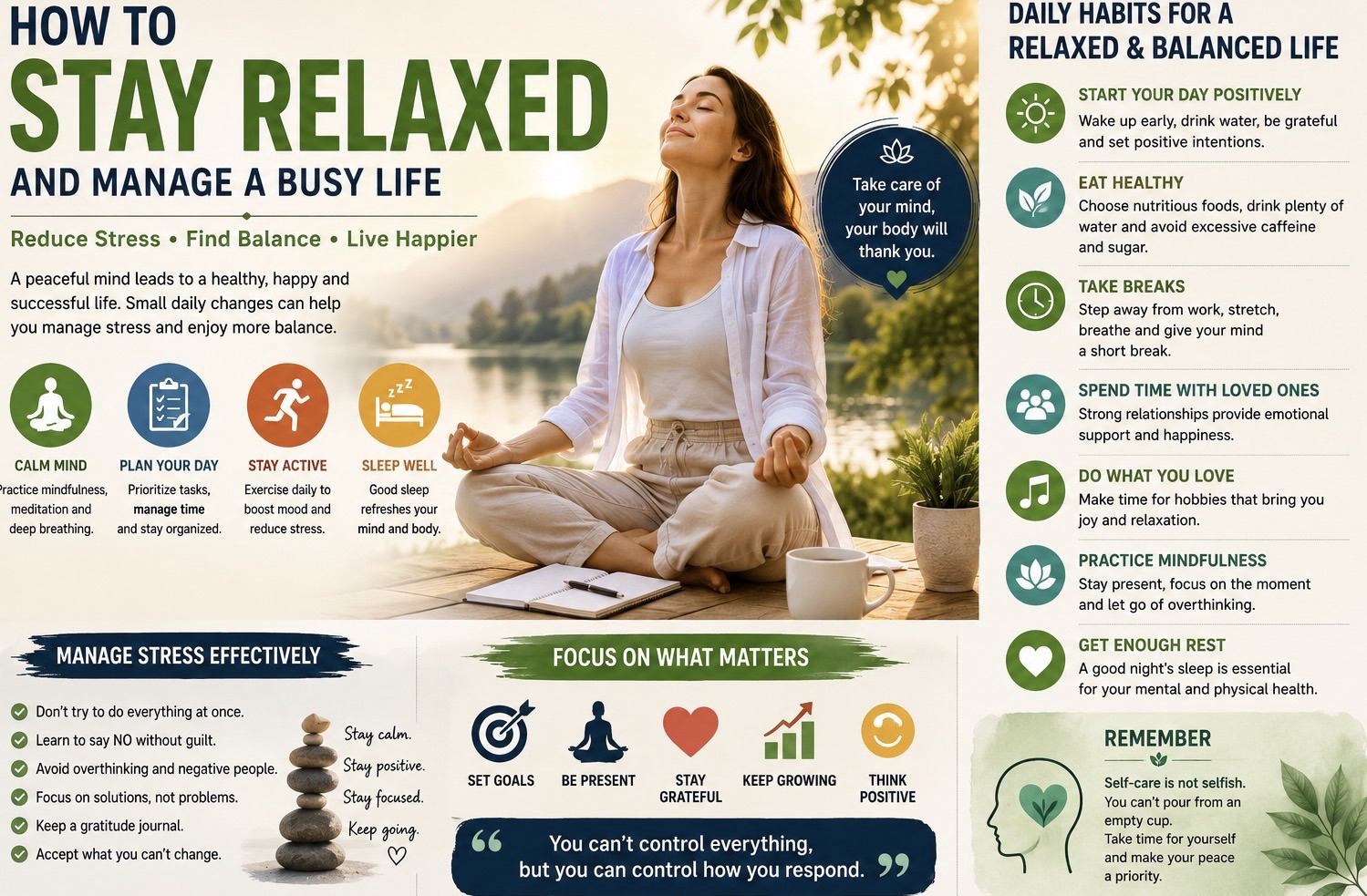
Modern life is busier than ever before. People constantly juggle work responsibilities, studies, financial pressures, family commitments, social expectations, and personal goals. Technology has made life more connected, but it has also increased stress, distractions, and mental exhaustion. Many individuals wake up feeling tired, rush through the day under pressure, and struggle to find time to relax or enjoy life.
Living a busy life is common today, but living in constant stress should not become normal. While responsibilities cannot always be avoided, learning how to manage stress and maintain inner peace is essential for physical health, mental wellbeing, emotional balance, and overall happiness.
Relaxation is not laziness. Resting the mind and body is necessary for productivity, creativity, focus, and long-term health. Without proper balance, stress can slowly damage both physical and emotional health.
This article explores practical and effective ways to stay relaxed, manage daily responsibilities, reduce stress, and create a healthier, more balanced lifestyle.
Understanding Why Modern Life Feels So Stressful
Before learning how to relax, it is important to understand why so many people feel overwhelmed today.
Several factors contribute to modern stress:
Heavy workloads Financial responsibilities Academic pressure Social media comparison Lack of sleep Poor time management Family obligations Information overload Unhealthy lifestyles Fear about the future
Many people try to stay productive every minute of the day. However, constantly pushing the mind and body without rest eventually leads to burnout.
Stress itself is not always bad. Small amounts of stress can motivate people to perform tasks and solve problems. The problem occurs when stress becomes constant and uncontrollable.
Chronic stress may lead to:
Anxiety Depression Fatigue High blood pressure Poor sleep Lack of concentration Emotional exhaustion Relationship problems Reduced productivity
This is why managing stress is essential for long-term wellbeing.
The Importance of Relaxation
Relaxation is often misunderstood. Some people believe relaxing means wasting time or avoiding responsibilities. In reality, relaxation helps recharge the mind and body so people can function more effectively.
Benefits of relaxation include:
Improved mental clarity Better decision-making Reduced anxiety Improved sleep quality Lower blood pressure Increased productivity Better emotional control Stronger immune system Improved relationships
When the mind is calm, people think more clearly, react more wisely, and handle challenges more effectively.
Start Your Day Calmly
The way a person starts the morning often influences the rest of the day.
Many people begin their mornings by immediately checking emails, social media, or stressful messages. This instantly activates stress and anxiety.
Instead, creating a peaceful morning routine can improve mood and productivity throughout the day.
Healthy Morning Habits
Wake up slightly earlier Avoid checking your phone immediately Drink water Stretch or exercise lightly Practice gratitude Spend a few quiet minutes in silence Eat a healthy breakfast Plan your day calmly
Even a calm 15-minute morning routine can positively impact the entire day.
Learn Time Management
Poor time management is one of the biggest causes of stress. When tasks pile up, people feel overwhelmed and anxious.
Good time management does not mean working nonstop. It means using time wisely and prioritising important activities.
Simple Time Management Strategies
1. Create a Daily Plan
Writing tasks down helps organise thoughts and reduce mental clutter.
Use:
To-do lists Calendars Phone reminders Planners
Focus on realistic goals instead of trying to complete everything at once.
2. Prioritise Important Tasks
Not all tasks are equally important.
A helpful approach:
Important and urgent tasks first Important but non-urgent tasks second Less important tasks later
Prioritising reduces unnecessary stress.
3. Avoid Multitasking
Many people believe multitasking improves productivity. However, constantly switching between tasks often increases mistakes and mental exhaustion.
Focusing on one task at a time improves efficiency and reduces stress.
4. Take Short Breaks
Working continuously without breaks reduces concentration and increases fatigue.
Short breaks help:
Refresh the mind Improve focus Reduce tension Increase creativity
Even a 5-minute break can make a difference.
The Power of Sleep
Sleep is one of the most important factors for mental and physical health. Yet many busy individuals sacrifice sleep to meet deadlines or responsibilities.
Lack of sleep affects:
Mood Memory Focus Energy Emotional stability Physical health
Poor sleep also increases stress levels.
Tips for Better Sleep
Sleep at consistent times Reduce screen time before bed Avoid heavy meals late at night Keep the bedroom quiet and comfortable Limit caffeine in the evening Practice relaxation before sleep
Quality sleep helps the body and mind recover from daily stress.
Exercise and Physical Activity
Physical activity is one of the best natural stress relievers.
Exercise releases chemicals called endorphins, which improve mood and reduce anxiety.
Benefits of exercise include:
Reduced stress Better sleep Improved energy Stronger mental health Increased confidence Better concentration
Exercise does not need to be intense.
Simple activities include:
Walking Yoga Cycling Swimming Dancing Stretching
Even 20–30 minutes daily can significantly improve mental wellbeing.
Healthy Eating and Stress Management
Diet directly affects mood, energy, and mental health.
Unhealthy eating habits may increase:
Fatigue Mood swings Anxiety Low energy
A balanced diet supports brain function and emotional stability.
Stress-Reducing Foods
Fruits Vegetables Nuts Whole grains Fish Yogurt Green tea Water-rich foods
Avoid excessive:
Sugar Fast food Alcohol Processed snacks Caffeine
Healthy nutrition supports both body and mind.
Practice Mindfulness and Meditation
Mindfulness means focusing fully on the present moment instead of constantly worrying about the past or future.
Meditation and mindfulness help calm racing thoughts and reduce stress.
Benefits include:
Improved focus Reduced anxiety Better emotional control Improved sleep Mental clarity
Simple mindfulness techniques:
Deep breathing Silent sitting Guided meditation Prayer Nature observation
Just a few minutes daily can help create inner peace.
Reduce Digital Stress
Technology is helpful, but excessive screen time can overwhelm the brain.
Constant notifications, emails, and social media comparisons increase stress and mental fatigue.
Ways to Reduce Digital Overload
Limit social media use Turn off unnecessary notifications Take screen-free breaks Avoid phone use before bed Spend more time offline
Creating healthy digital boundaries improves mental wellbeing.
Learn to Say No
Many people become stressed because they try to please everyone.
Taking on too many responsibilities can lead to burnout.
Learning to say “no” respectfully protects:
Time Energy Mental health
Healthy boundaries are important for maintaining balance.
Spend Time with Family and Friends
Strong relationships provide emotional support during stressful times.
Talking to trusted people helps reduce emotional pressure.
Quality time with loved ones:
Improves mood Reduces loneliness Builds emotional strength Creates happiness
Human connection is essential for mental wellbeing.
Make Time for Hobbies
Busy lifestyles often leave little time for enjoyable activities. However, hobbies help relax the mind and reduce stress.
Examples include:
Reading Music Gardening Painting Cooking Photography Writing Travelling
Doing something enjoyable improves emotional balance.
Financial Stress Management
Money-related stress affects millions of people worldwide.
Financial anxiety often comes from:
Debt Poor budgeting Unexpected expenses Lack of savings
Healthy Financial Habits
Create a monthly budget Track spending Avoid unnecessary debt Save regularly Plan for emergencies
Financial planning reduces uncertainty and stress.
Spiritual and Emotional Wellbeing
Many people find peace through spirituality, prayer, or personal reflection.
Spiritual practices may help:
Reduce anxiety Improve emotional strength Increase hope Provide meaning in life
Different people connect spiritually in different ways.
Activities may include:
Prayer Meditation Temple visits Church services Gratitude practices Acts of kindness
Inner peace often begins with emotional and spiritual balance.
Avoid Perfectionism
Trying to make everything perfect creates unnecessary pressure.
Perfectionism often leads to:
Fear of failure Anxiety Overthinking Procrastination
Nobody’s life is perfect.
Learning to accept mistakes and imperfections helps reduce stress and improve self-confidence.
Progress is more important than perfection.
The Importance of Gratitude
Gratitude shifts focus from problems to positive aspects of life.
People who regularly practice gratitude often experience:
Greater happiness Reduced stress Better relationships Improved emotional wellbeing
Simple gratitude habits:
Writing daily blessings Saying thank you Appreciating small moments
A grateful mindset helps create positivity even during difficult times.
Spend Time in Nature
Nature has a calming effect on the human mind.
Spending time outdoors can:
Reduce stress hormones Improve mood Increase relaxation Improve mental clarity
Activities include:
Walking in parks Beach visits Gardening Hiking Watching sunsets
Fresh air and natural environments help calm the nervous system.
Accept That Life Will Always Have Challenges
Many people become stressed because they expect life to always be easy.
In reality, challenges are a natural part of life.
Instead of trying to avoid all difficulties, learning healthy coping skills is more important.
Strong mental health comes from:
Adaptability Patience Resilience Emotional control
Problems may not disappear completely, but the ability to handle them improves.
Create Work-Life Balance
One of the biggest struggles in modern society is balancing work and personal life.
Overworking can damage:
Health Relationships Mental wellbeing
Tips for Better Balance
Set working hours Avoid bringing work stress home Schedule personal time Rest without guilt Prioritise family and health
Success is meaningless without health and happiness.
Small Daily Habits That Improve Relaxation
Simple habits can significantly improve emotional wellbeing over time.
Examples include:
Drinking enough water Smiling more Taking deep breaths Listening to calming music Keeping living spaces organised Limiting negativity Practicing kindness
Small consistent habits create long-term positive change.
Mental Health Matters
Stress becomes dangerous when ignored for too long.
Seeking professional support is important when experiencing:
Severe anxiety Depression Panic attacks Emotional breakdown Constant hopelessness
Talking to a mental health professional is a sign of strength, not weakness.
Mental health deserves the same attention as physical health.
Building a Peaceful Lifestyle
A peaceful life is not about having zero problems. It is about learning how to remain calm and balanced despite challenges.
True peace comes from:
Healthy habits Emotional balance Positive thinking Self-care Strong relationships Gratitude Purpose
Happiness is often found in simple moments rather than constant achievement.
Conclusion
Modern life can be fast, demanding, and stressful, but maintaining peace and balance is possible with the right habits and mindset. Relaxation is not a luxury — it is a necessity for a healthy and fulfilling life.
Managing stress effectively involves caring for the body, mind, emotions, relationships, and daily routines. Small positive changes such as proper sleep, healthy eating, exercise, mindfulness, gratitude, and time management can greatly improve wellbeing over time.
No life is completely free from stress, but learning how to respond calmly and wisely to challenges makes a significant difference.
In a busy world filled with pressure and distractions, protecting inner peace becomes one of the most valuable investments a person can make.
Take time to breathe, rest, smile, and care for yourself. A balanced and peaceful life is not built in one day — it is created through small daily choices that support long-term happiness and wellbeing.